
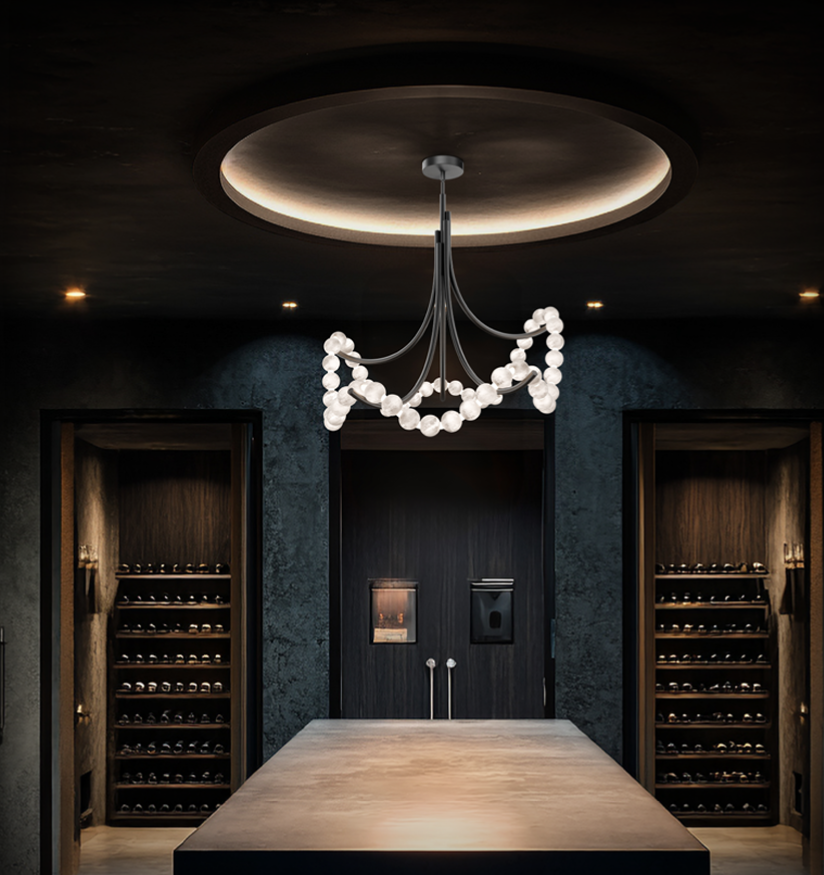
You found the perfect chandelier. Then you screwed in the wrong bulbs — and suddenly your warm, elegant dining room feels like a dentist's office. The bulb you choose matters just as much as the fixture itself, because with a chandelier the light source is often exposed and visible. This guide covers the two decisions that make or break the look: color temperature (the warmth of the light) and bulb type (shape, base, finish, and technology). Ten minutes of reading, and you'll never buy the wrong bulb again.
Already have your fixture picked out? Pair this guide with our dining room chandelier sizing guide to nail both size and light quality.
The Short Answer
Color Temperature, Explained in 60 Seconds
Color temperature is measured in Kelvin (K) and describes how warm or cool light looks — it has nothing to do with heat or brightness.
| Kelvin | Name | Looks Like | Best For |
|---|---|---|---|
| 2200K | Amber / vintage | Candlelight | Vintage filament fixtures, restaurants |
| 2700K | Soft/warm white | Classic incandescent | Chandeliers, dining rooms, living rooms, bedrooms |
| 3000K | Warm white | Slightly crisper warm | Kitchens, bathrooms, transitional spaces |
| 3500–4000K | Neutral/cool white | Clean, showroom light | Task areas, garages, offices |
| 5000K+ | Daylight | Midday sun | Workshops, security lighting — not chandeliers |
Two things to remember: brightness is measured in lumens, not Kelvin — a 2700K bulb and a 5000K bulb can be equally bright but feel completely different. And warmer light is more flattering: skin tones, food, wood, and warm paint colors all look their best under 2700K–3000K. For living rooms, layering ambient, task, and accent at one temperature is the pro move — see our living room layers guide. The same 2700K–3000K rule applies outdoors — see our outdoor lighting guide.
Chandelier sweet spot
Warm, flattering atmosphere. Food and finishes look their best.
Showroom-clean feel. Flattened warmth on wood and brass.
Dentist-office brightness. Wrong for decorative fixtures.
Pick your vibe — shop the right bulbs
Each mood maps to the catalog two ways: browse by filters for the widest selection, or search by keyword when you know the socket size (candelabra E12 is the small base on most chandeliers), Kelvin, or bulb style you need.
Flattering light for dining rooms, crystal, and brass — the chandelier sweet spot.
Maximum refracted fire on crystal and candelabra-style fixtures.
Slightly cleaner warm white for open kitchens and transitional spaces.
Amber, restaurant-style glow for mood-heavy decorative fixtures.
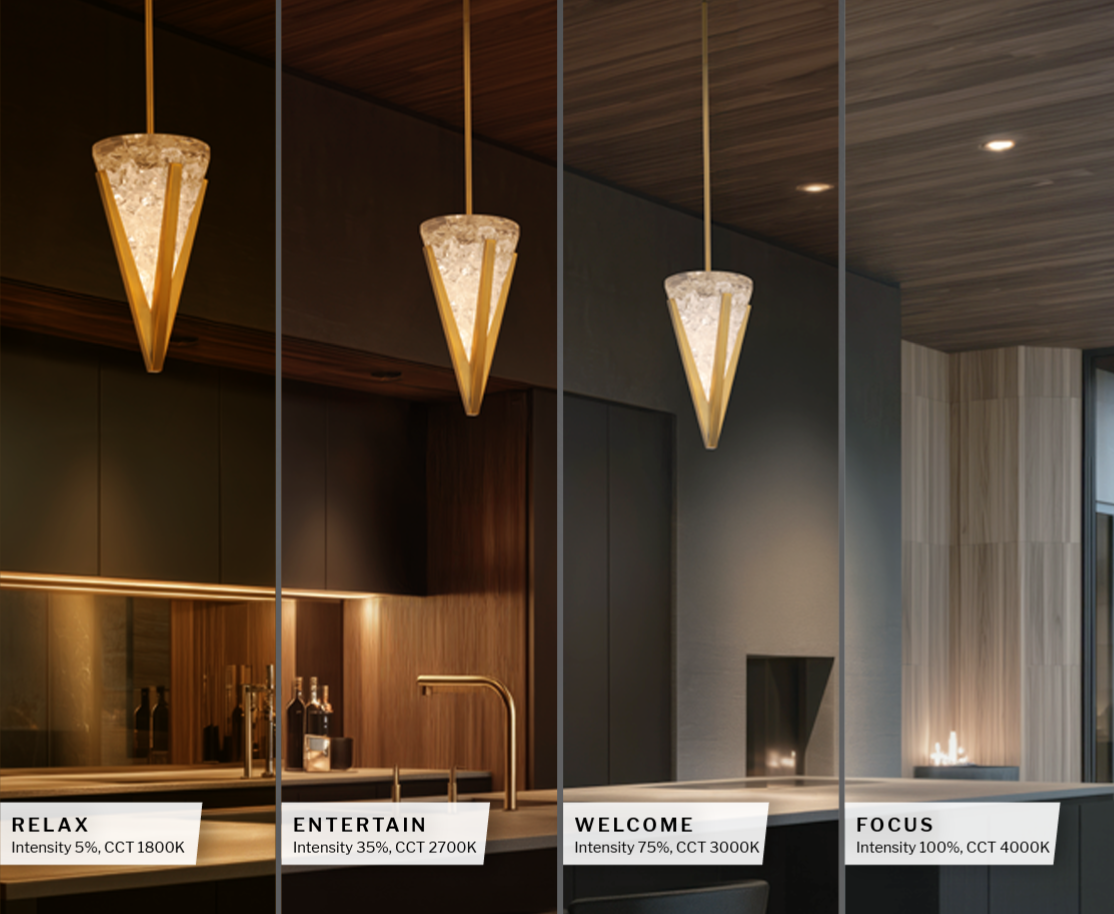
Why 2700K Is the Chandelier Standard
Chandeliers expose their light sources more than almost any other fixture — you see the bulbs themselves, not just the light they cast. That makes color temperature far more noticeable. A few specifics:
- Crystal chandeliers: 2700K warm white is ideal. Cooler light flattens crystal; warm light makes it sparkle with the fire it was designed for. Use clear (not frosted) bulbs so the crystal refracts visible filament light.
- Dining room chandeliers: stay at 2700K or warmer. Dining is about atmosphere, and cooler temperatures read as commercial.
- Brass, gold, and warm-metal fixtures: warm light enriches the finish; cool light makes gold look brassy and cheap. See our finish guide for warm/cool pairings and mixing rules.
- Modern chrome/black fixtures in kitchens: you can stretch to 3000K if the surrounding kitchen lighting is 3000K — matching matters more than the number. See our kitchen lighting layout guide for layering and color temperature in open plans.
The consistency rule: keep every bulb in a single fixture — and ideally every fixture in the room — at the same color temperature. One 4000K bulb in a 2700K chandelier is instantly visible and instantly wrong. Buy bulbs in multi-packs from the same brand and batch.
Which Bulb Technology?
LED is the answer for almost everyone. Modern LED filament bulbs replicate the incandescent look while using about 85% less energy and lasting 15,000–25,000 hours versus roughly 1,000 for incandescent. In a 12-arm chandelier 12 feet in the air, bulb lifespan isn't a footnote — it's the difference between changing bulbs once a decade and renting a ladder every few months.
What to look for in a chandelier LED:
- Dimmable — non-negotiable. Verify the box says dimmable; not all LEDs are. Pair with an LED-compatible dimmer (more on that below).
- CRI 90+. Color Rendering Index measures how accurately colors appear under the light. 80 is acceptable; 90+ is what premium spaces deserve. Cheap high-Kelvin LEDs with low CRI are why some rooms feel "off."
- Filament-style (Edison) LEDs for any fixture with exposed bulbs — the visible "filament" LEDs inside the glass give the classic look.
- Warm-dim technology is the premium upgrade: these LEDs shift down to as low as 1800–2000K as you dim, mimicking the way incandescent bulbs glowed amber at low levels. For a formal dining room, this is the detail that separates good lighting from great.
Incandescent and halogen still exist and still have devotees — nothing renders crystal quite like a real filament. But energy regulations have removed most general-service incandescents from the U.S. market, they run hot, and lifespan is short. Our take: specialty vintage applications only.
Colors look muted and slightly gray.
Rich, true-to-life color — worth the upgrade.
Getting the Base and Shape Right
Before buying anything, check your fixture's socket size:
- E12 (candelabra base) — the small base, standard on most chandeliers.
- E26 (medium base) — the standard household base, found on larger or transitional fixtures.
- Check the fixture's spec sheet or the old bulb's base; forcing the wrong base is the most common bulb-buying mistake.
Common chandelier bulb shapes
Clear vs. frosted: clear glass for crystal and any fixture where sparkle is the goal; frosted for a softer, diffused glow and to reduce glare when bulbs sit at eye level (over a table, in a stairwell sightline).
How Bright? (Wattage and Lumens)
Think in lumens, not watts. A typical candelabra LED delivers 300–500 lumens (a 40–60W incandescent equivalent) while drawing only 4–6 watts. For a dining room, target roughly 1,800–3,600 total lumens across the fixture — so a six-arm chandelier with 400-lumen bulbs (2,400 lumens total) is right in the zone. Never exceed the fixture's labeled maximum wattage per socket; with LEDs, you'll be far under it anyway.
The Dimmer: The $30 Upgrade That Changes Everything
A chandelier without a dimmer is a light switch; a chandelier with one is an atmosphere machine. Weeknight homework at 100%, dinner party at 40%, nightcap at 15%. Two rules:
- Use an LED-rated dimmer (older incandescent dimmers cause flicker and buzz with LEDs).
- Check the bulb manufacturer's dimmer compatibility list if you notice flickering — mismatches, not bad bulbs, cause most LED dimming complaints.
A dedicated dimmer guide is coming soon — for now, pair any new chandelier bulbs with an LED-compatible wall dimmer from a major manufacturer.
Common Mistakes
- Mixed Kelvin in one fixture. One cool bulb in a warm chandelier is instantly visible — buy bulbs in multi-packs from the same batch.
- Non-dimmable LEDs on a dimmer. Flicker and buzz usually mean a compatibility mismatch, not a bad bulb.
- Low CRI bulbs. Cheap LEDs with CRI below 80 make food and finishes look flat — aim for 90+.
- Wrong base size. E12 vs E26 is not interchangeable — check the fixture spec sheet before you buy.
Quick Answers
What color temperature is best for a chandelier?
2700K warm white — the designer standard for decorative fixtures, and the most flattering to people, food, and finishes.
Is 3000K too white for a dining room?
It's noticeably crisper than 2700K. For dining rooms we recommend 2700K; save 3000K for kitchens and baths.
Can I use daylight (5000K) bulbs in a chandelier?
You can, but we'd talk you out of it — daylight bulbs make decorative fixtures feel clinical and flatten crystal and warm metal finishes.
What is the most common chandelier bulb base?
E12 candelabra. Check your fixture's spec sheet to confirm.
Are LED bulbs OK for crystal chandeliers?
Yes — choose clear, filament-style, dimmable LEDs at 2700K with CRI 90+ for the best sparkle.
Why do my LED bulbs flicker when dimmed?
Usually a dimmer compatibility issue. Replace older dimmers with an LED-rated model and check the bulb maker's compatibility list.
Ready to shop?
Every chandelier on LogicX lists its bulb base, maximum wattage, and bulb count right on the product page — and our specialists can recommend the exact bulbs for any fixture we carry. Questions about an existing fixture? Send us a photo and we'll spec the bulbs for free.