
You're shopping for lights to hang over your kitchen island, and the categories are already confusing you: some fixtures are called pendants, some are called island lights, some are linear pendants or linear chandeliers — and they all seem to hang from the ceiling over an island. Are they the same thing? Different things? Which one should you buy? Here's the clear answer, in plain language, so you choose the right fixture type the first time.
The Short Answer
There's one more wrinkle, and it's the source of most confusion: in lighting catalogs, "island light" (also called a linear pendant, linear chandelier, or island chandelier) has come to mean a specific fixture type — one long, horizontal fixture with multiple lights on a single frame, designed to stretch over an island or rectangular table. So when you're comparing "pendants vs. island lighting," you're usually really comparing:
- Multiple individual pendants hung in a row (2 or 3 separate fixtures), versus
- One linear island fixture (a single elongated fixture with several lights built in).
Both live over the island. The right choice depends on your island, your ceiling, and your style. Here's how to decide.
2–3 separate fixtures · flexible style
One elongated fixture · even coverage
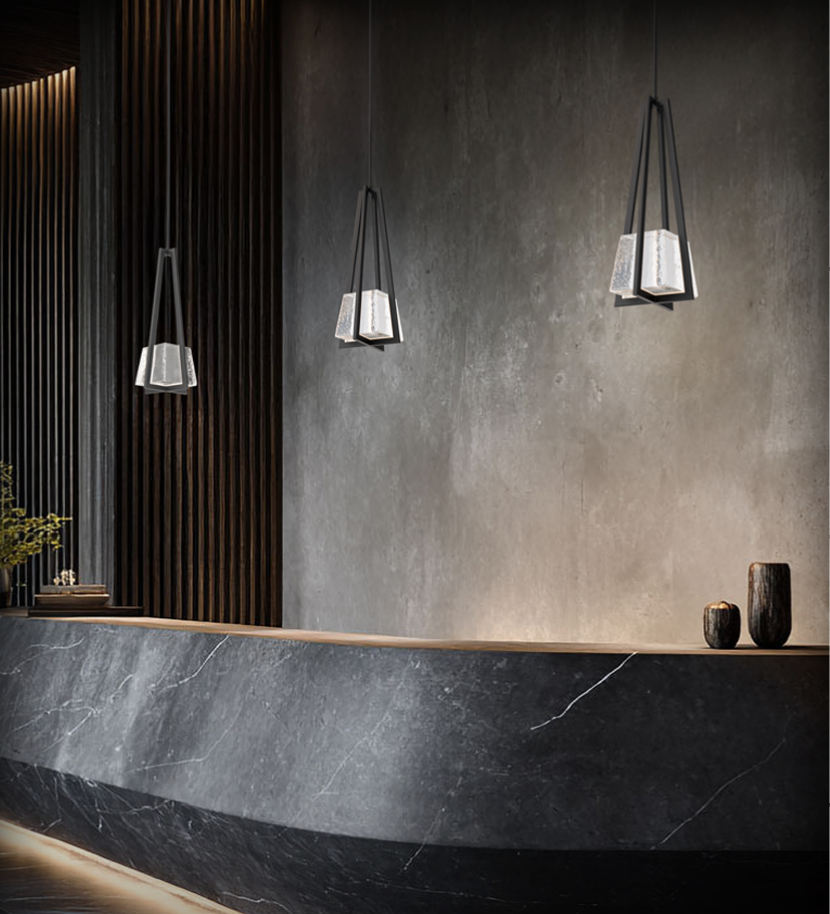
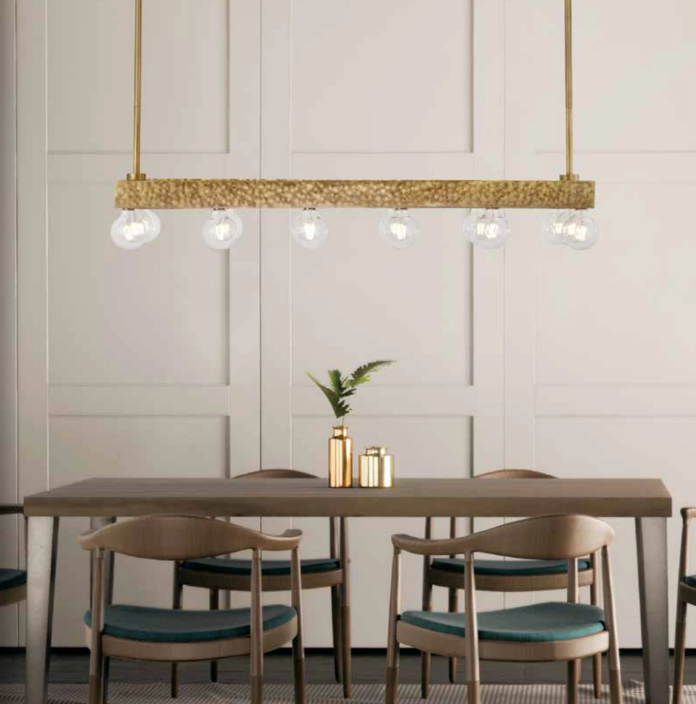
Option 1: A Row of Pendants
Individual pendants hung in a series — usually two or three — are the classic island look and the most popular choice in today's kitchens.
Choose pendants when:
- Your island is small to medium (under ~7 feet). Islands under 5 feet suit one or two pendants; 5–7 feet suits two mid-size pendants; around 8 feet, two substantial pendants or three smaller ones.
- You want rhythm and repetition. A row of matching pendants creates a deliberate, orderly focal point and suits nearly every style, from farmhouse lanterns to modern glass globes.
- You want flexibility. Pendants come in thousands of designs, and you can scale the count to your island. Rule of thumb: roughly one pendant per 2 feet of island length, adjusted for pendant size.
- You may want to adjust later. Swapping three small pendants for two larger ones changes the whole kitchen for the cost of the fixtures.
Pendant watch-outs:
- Each pendant typically needs its own junction box, so count and placement are set at rough-in — changing from two to three later means electrical work.
- Spacing math matters: keep pendants 24–36 inches apart center-to-center with at least 6 inches from each island end, and hang them 30–36 inches above the countertop. See our kitchen lighting count guide for the full spacing diagram.
- Material affects the look: glass pendants read light and airy and can sit closer together; opaque metal pendants carry more visual weight and need more breathing room. Our finish mixing guide helps pair metals with your kitchen hardware.
- With very low ceilings, a row of pendants can crowd sightlines — slim or glass designs help, or consider semi-flush fixtures instead.
Option 2: A Linear Island Fixture
One elongated fixture — a linear pendant or island chandelier — carrying multiple lights on a single frame.
Choose a linear fixture when:
- Your island is long (8 feet or more). One linear fixture provides continuous, even coverage that would otherwise take three or more pendants, with a cleaner, more architectural look.
- You want one statement instead of repetition. A single sculptural linear fixture reads as furniture-grade design — a favorite move in current modern and organic-modern kitchens, where linear fixtures are increasingly replacing pendant rows.
- You want even task light with no gaps. Multiple bulbs along one frame eliminate the pools-and-shadows pattern a spread-out pendant row can create.
- You want simpler installation. One fixture, one junction box, one centering decision.
Linear fixture watch-outs:
- Size to the island: the fixture should span roughly one-third to two-thirds of the island's length — never longer than the island.
- It's a bigger commitment: one large fixture is the room's centerpiece, so style confidence matters more than with swappable pendants.
- Rectangular fixtures can often hang slightly higher than pendant rows thanks to their larger visual mass, which helps with open sightlines.
Quick Decision Guide
| Your Situation | Best Choice |
|---|---|
| Island under 5 ft | 1–2 pendants |
| Island 5–7 ft | 2 pendants (or 3 smaller) |
| Island 8 ft+ | 3 pendants or one linear fixture |
| Long island + modern/minimal style | Linear fixture |
| Traditional/farmhouse/eclectic style | Pendant row |
| Low ceilings (8 ft) | Slim glass pendants or semi-flush |
| Want maximum even task light | Linear fixture |
| Want flexibility to restyle later | Pendants |
Same Rules Either Way
Whichever type you choose, three rules don't change:
- Hang it 30–36 inches above the countertop (measured to the lowest point of the fixture) — closer to 30" for 8-foot ceilings, higher for taller ceilings. Keep the fixture bottom above the eye line of the tallest person in the house.
- Center over the island, not the room.
- Put it on a dimmer — the island is prep station by day and gathering spot by night.
And remember the fixture over your island is one layer of a complete kitchen plan — pair it with recessed ambient light and under-cabinet task lighting so the island fixture can be beautiful and the room stays shadow-free. See our full guide: How Many Lights Should You Have in Your Kitchen?
Common Mistakes
- Confusing fixture type with location. "Island lighting" in a catalog usually means a linear fixture, not any light over an island.
- Wrong count for island length. Two pendants on an 8-foot island look sparse; three pendants on a 5-foot island feel crowded.
- Hanging too high or too low. Stay in the 30–36 inch zone above the countertop.
- Island light as the only kitchen layer. Pair with recessed ambient and under-cabinet task lighting — see our kitchen lighting count guide.
Quick Answers
Is island lighting the same as pendant lighting?
Not exactly. A pendant is a fixture type (one hanging light); island lighting is anything hung over an island. In catalogs, "island light" usually means a single long fixture with multiple lights — the alternative to hanging several individual pendants.
What is a linear pendant or island chandelier?
One elongated, horizontal fixture with multiple light sources on a single frame, made to span a kitchen island or rectangular table.
Should I use pendants or one linear light over my island?
Under about 7 feet, a row of two (sometimes three) pendants is the standard. At 8 feet and longer, choose three pendants or one linear fixture — the linear option gives more continuous light and a cleaner modern look.
How high should island lighting hang?
30–36 inches from countertop to the bottom of the fixture, whichever type you choose.
Can you put a chandelier over a kitchen island?
Yes — a small-scale or linear chandelier over an island is a popular upgrade, following the same height and sizing rules.
How many pendants over an 8-foot island?
Three pendants is the standard for an 8-foot island, spaced 24–36 inches apart center-to-center with at least 6 inches from each end. A single linear island fixture is an equally valid alternative.
Ready to shop?
Browse our Island & Linear Lighting collection side-by-side with our Pendants collection — every product page lists exact fixture length and recommended island sizes. Not sure which suits your kitchen? Send our specialists your island dimensions and ceiling height, and we'll recommend both a pendant option and a linear option so you can compare.